Spoiler Alert: Even if the Series is almost 30 years old!
When I think back on the Animorphs series, it’s like unlocking a secret door into a wild, messy corner of my childhood — the part that was thrilling, sometimes hilarious, often scary, and way deeper than I could wrap my head around back then. Animorphs wasn’t just another story about kids saving the world. It was chaotic, raw, complicated. For a lot of us who grew up turning those pages, it left marks we didn’t even recognize until we were older.
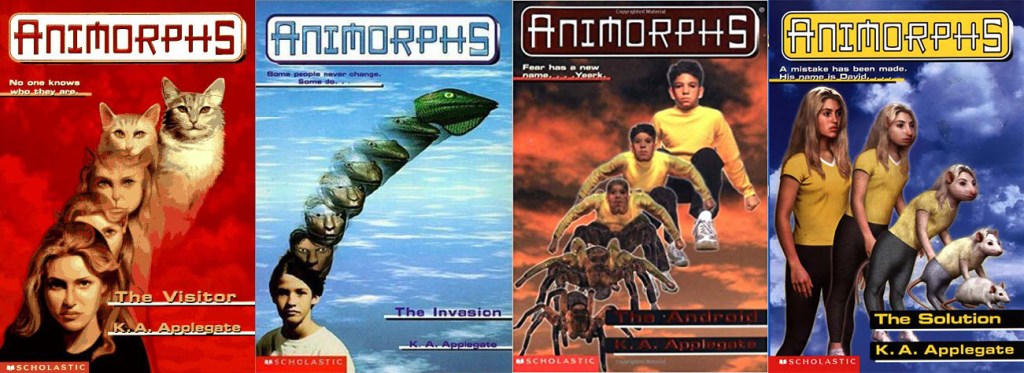
At first glance, sure, it was about kids turning into animals — and honestly, what could be cooler? The idea of soaring overhead as a hawk, stalking silently like a tiger, or even slithering around like a snake lit up my imagination like nothing else. It grabbed hold of even the kids who didn’t think they liked books. Animorphs made reading feel dangerous, urgent, addicting. I still remember devouring those slim little paperbacks like candy, always itching to find out what came next. Even those awkward CGI covers, with the weird mid-morph faces, somehow just made it feel more authentic in that unmistakable ’90s way.
What totally sailed over my head at the time were the bigger, heavier truths stitched into all the action. Stuff like war, the environment, morality — Animorphs didn’t just nod at those ideas; it plunged straight into them. But back then, I was way too caught up worrying about whether they’d survive the next insane mission, or if Ax was going to blurt out something ridiculous, or if Marco would crack the worst joke at the worst possible time. It wasn’t until years later that it hit me: Animorphs had been teaching me about loss, about trauma, sacrifice, even about how easily people can wreck the world around them — and it did it all while making me believe I was just reading about kids turning into animals to fight alien slugs. It was genius. And honestly, brutal.
Marco’s jokes especially stuck with me, even if I didn’t fully get why at the time. He was the one who could still laugh, even when everything around them was falling apart at the seams. I still crack up remembering when he sang “I kill you, you kill me, we’re an alien family” to the Barney tune — it was so absurd, so perfect. But looking back, it was more than comic relief; it was survival. Marco needed the humor like a shield, and once you knew about his mom, his dad, and everything he was carrying, those jokes felt less like throwaways and more like lifelines. He wasn’t just keeping himself sane — he was fighting to keep the others from sinking too.
And then there was Tobias. Tobias broke my heart. He was always my favorite, even before I fully understood why. Trapped as a hawk, caught between two worlds he didn’t belong to — his story wasn’t just sad; it was gutting. The more you sat with it, the heavier it got. Abandoned, pushed aside, and then learning the truth about his father, only to be stuck in a body that made him even more isolated? It was devastating. Tobias never got a neat answer to who he was. A human, an Andalite’s son, but never fully either. His loneliness wasn’t a passing storm; it was the air he had to breathe. Even with Rachel reaching out, even with allies at his side, there was always that invisible wall he could never really break through. The poor kid so his father eaten in front of him and his own mother did not remember him. His aunt and uncle were abusive and neglectful and he lived in abject poverty.
One scene that guts me even more now, looking back, is when Tobias returns to his old house and sees what’s left of it, just emptiness and decay. No dramatic showdown, no alien battle. Just silence. Just abandonment. It hit harder than any fight with the Yeerks ever could. That moment captured the real cost of everything — not just lives lost on the battlefield, but the lives that were already broken long before the war even started. Tobias carried that ache into every mission, dragging it behind him like a shadow. And somehow, even with all that weight, he never stopped fighting.
Jake’s story hits differently now too. As a kid, he was the leader — the guy with the plans, the one you trusted to pull everyone through. Simple as that. But reading it again, years later, you see, it wasn’t simple at all. Jake wasn’t born to lead; he just couldn’t walk away when no one else could step up. Every death, every impossible choice — it all stacked up on his back. Sending Rachel on what he knew was a suicide mission, sacrificing innocents because he had to, giving orders to kill… those choices didn’t make him stronger. They hollowed him out. And when it was finally over, when the world threw parades and called him a hero, Jake was the one left behind, empty. Because he remembered. He knew exactly what he had done to win — and he knew what it had cost him.
Cassie’s story always felt different from the others. She was the heart of the group, but not in some soft, sentimental that became saccharin or cliché. Cassie’s sense of right and wrong was stubborn, fierce — a painful reminder that winning wasn’t everything. She wouldn’t let the war hollow her out. She was the one who kept asking the hard questions: Was every kill justified? Were there lines you just shouldn’t cross, even when everything was at stake? Sometimes the others saw her hesitation as weakness. But more often, it was the bravest thing anyone could do. Cassie was willing to lose a fight if it meant saving her soul, and that made some of her decisions almost unbearable to watch. Her choice to let Tom go free during the final battle wasn’t just controversial — it was devastating. It was a gut-punch reminder that some losses are better than the cost of becoming something you can’t come back from.
And then there was David. God, that storyline still lingers like a bad dream. Introducing a new Animorph was shocking enough, but watching David fall — slowly, painfully — into villainy was brutal because it felt so real. He wasn’t cartoon evil. He was scared, desperate, furious. And that made him dangerous in a way nothing else had. Watching the group try to save him, control him, even reason with him — and fail — was one of the darkest arcs in the series. There was no fixing David. No compromise. In the end, they trapped him forever as a rat because there was nothing else they could do. It wasn’t noble. It wasn’t heroic. It was ugly. And Animorphs didn’t pretend otherwise. They carried that stain with them. We carried it too.
Ax’s tragedy hit differently — quieter, maybe, but just as heartbreaking. Brave, brilliant Ax. He wanted so badly to do the right thing — to honor his brother, to serve his people, to stand by his friends. But the Andalites, the ones he idolized, weren’t heroes. They lied. They manipulated. They were ready to wipe out Earth just to win. Watching Ax realize that, watching him wrestle with where his loyalty should really lie, was devastating. He lost the foundation he built his whole life on. And when he vanished into the stars at the end, swallowed by another war he could never truly win, it didn’t feel surprising. It felt like it was always going to end that way for him.
The Yeerks were never simple monsters, either. Sure, Visser Three was pure nightmare fuel — sadistic, theatrical, evil to the bone. But the rest? Most Yeerks were just… trapped. Victims of their own biology, their own system. Some of them wanted something better. The Peace Movement showed us Yeerks who loved the ocean’s endless beauty, Yeerks who hated the violence they were forced to commit. Aftran’s story — the Yeerk Cassie set free, who chose blindness over slavery — still wrecks me. In any lesser story, the Yeerks would’ve been just villains. But Animorphs turned them into a mirror, forcing us to see the awful, desperate things survival can make anyone do.
And the environment — the world itself — wasn’t just background noise. It was alive, breathing, vital. Every morph, every transformation was a reminder of the natural world they were fighting for, and sometimes destroying without even meaning to. I still think about those moments — Cassie becoming a whale and feeling the ocean’s vast heart beating around her, the rainforest morphs where the Earth felt so raw and alive. And the horror when the Yeerks started poisoning rivers, choking forests, grinding everything under their boot. Animorphs didn’t preach at you. It didn’t need to. It showed you — and if you were paying attention, it made you care, deep down, without even realizing it.
Then there is the writing itself. It was the age of ghostwriters. ghostwriter era… yeah, looking back, it’s easy to see where the shifts crept in. Some of those books were brilliant — “The Departure,” where Cassie wrestles with the morality of the war, still hits as hard and raw as anything Applegate herself could’ve written. But others, especially later on in the 30s and 40s, felt a little thinner, a little more distant. The voices of the characters would slip sometimes. Filler plots sneaked in. It was a real rollercoaster. But even when it stumbled, Animorphs never lost its heart. The big moments, the gut-punch emotions, the sense that it all mattered — that stayed. You could feel K.A. Applegate’s hand at the wheel, even when someone else was helping row.
And then there’s that ending. God, that ending. Animorphs didn’t hand us a clean, shiny victory tied up in a neat bow. It gave us something real. The war didn’t end with heroes posing triumphantly — it ended with broken kids limping away from the wreckage, carrying pieces of themselves they’d never get back. Jake lost the ability to trust his gut. Marco built up a mask so thick he almost vanished behind it. Cassie tried to grow something new but carried wounds that never really healed. Tobias, poor Tobias, was left circling the skies, mourning Rachel, unseen by the world below. And Ax, brave, loyal Ax, got swallowed by a new war that felt just like the old one — endless, cold, and merciless.
The last stretch didn’t let us pretend otherwise. It didn’t pat us on the head with easy justice or happy-ever-after redemption. It gave us Jake, authorizing strikes that killed civilians in the name of strategy. It reminded us of the team that once trapped another Animorph — David — forever in morph, the boy they once believed could be one of them. It showed us kids lying to adults, manipulating, risking lives, sabotaging, even killing — not for glory, but just to survive.
We were kids too, reading about other kids who poisoned rivers to stop the Yeerks, who wrecked ecosystems on purpose, who made calls that grown soldiers and generals would have balked at. And when they won? It didn’t undo a damn thing. It didn’t erase the dead. It didn’t wipe away the hurt. All it did was pass the violence on to new faces, new battles, new scars. It was raw. It was brutal. And it was exactly what Animorphs had to be.
Sometimes I think that’s why it stuck with me all these years. It didn’t lie. It didn’t feed us the easy fairytales that doing the right thing means you’ll live happily ever after. Sometimes, survival’s the best you get. Animorphs taught me that heroes aren’t spotless. They’re the ones who keep fighting even when it wrecks them.
I still remember sitting there with the last book heavy in my hands, staring at that final page like if I just waited long enough, maybe it would change. I didn’t get the closure I thought I wanted. But I got something that’s stayed with me a lot longer. Something real. An ending that hurt because it had to. An ending that said some things just can’t be fixed.
Looking back now, I can see it — Animorphs shaped more than just what kinds of stories I like. It shaped how I see the whole damn world. It taught me that being brave can be messy and ugly. That even good people can make terrible choices. That empathy isn’t a weakness, and that surviving isn’t the same as winning. It taught me that fighting for what’s right matters, even if it costs you more than you think you can bear.
It showed me the real fight isn’t about turning into monsters to survive. It’s surviving, and somehow managing to live with yourself afterward.
Animorphs wasn’t just a series I read when I was a kid. It’s stitched into who I am now. It didn’t just tell a story — it rewired something deep inside me.
And for that, I’ll always be grateful.
 Sally the Scribe
Leave a comment